Skip Navigation

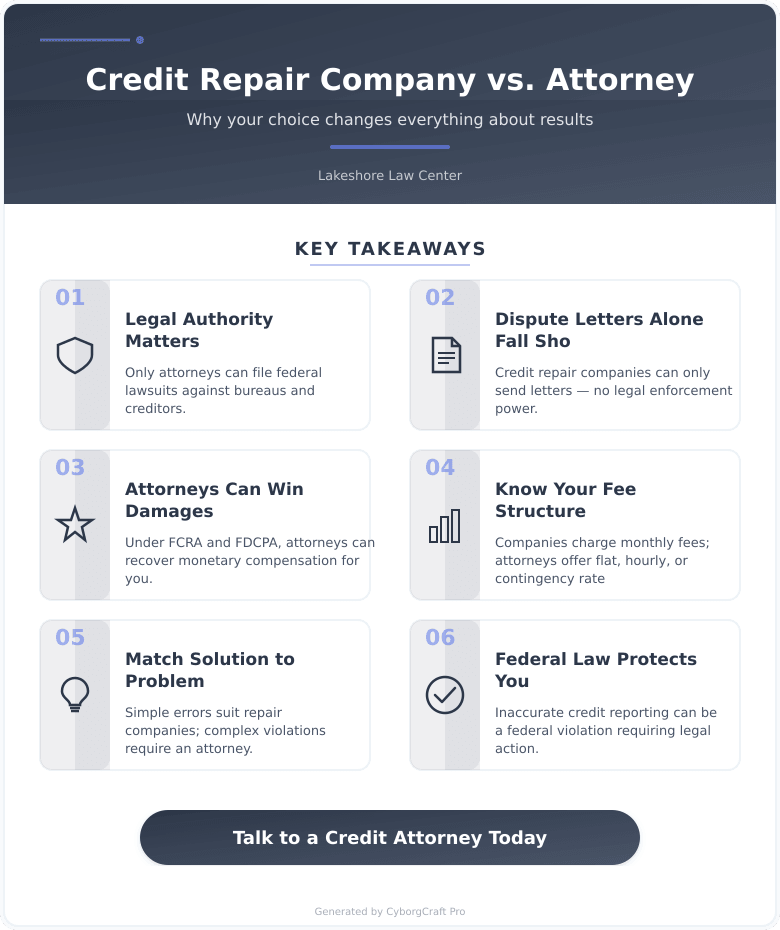
The Difference Between a Credit Repair Company and a Credit Repair Attorney – And Why It Changes Everything About Your Results

Most California consumers dealing with credit report problems don’t realize there’s a meaningful legal difference between hiring a credit repair company and working with a licensed attorney. Credit repair companies send dispute letters – that’s the core of what they do. They have no authority to file lawsuits, compel creditor compliance, or pursue compensation for federal violations. A credit repair attorney, by contrast, can use the Fair Credit Reporting Act and the Fair Debt Collection Practices Act to apply real legal pressure, negotiate binding settlements, and recover damages when warranted. For simple clerical errors, a dispute letter may be enough. For anything more complex – disputed accounts, collection issues, repeated bureau non-responses, or legally actionable inaccuracies – legal representation changes the outcome entirely. California also provides state-level protections that go beyond federal law, giving attorneys additional tools that credit repair companies simply cannot access.

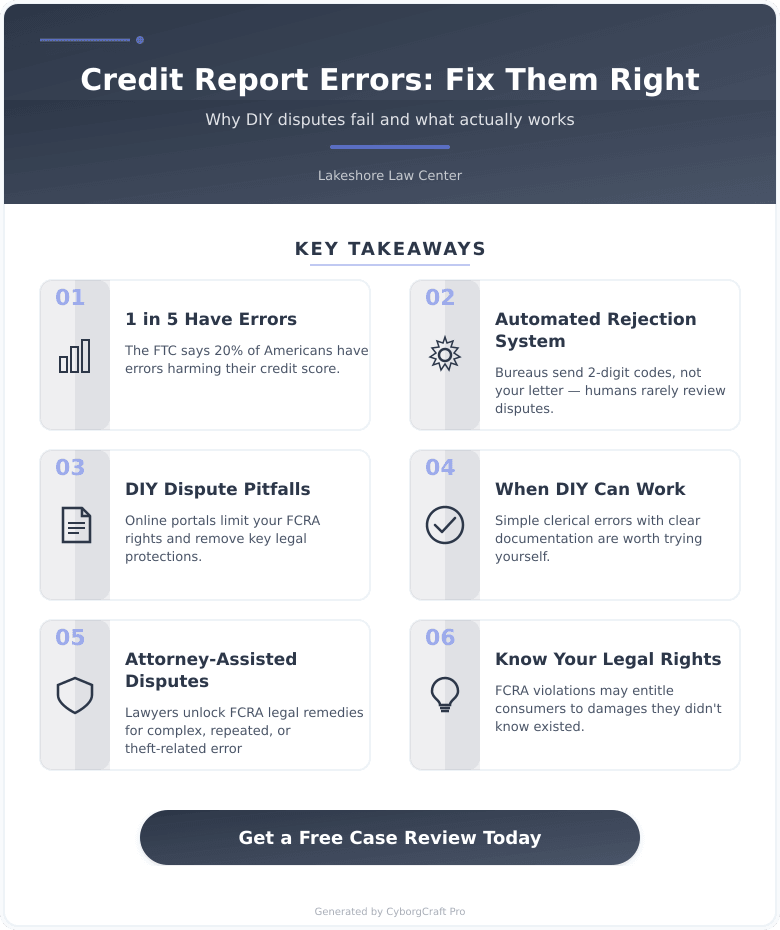
Your Credit Report Has an Error – Here’s Why Disputing It Yourself Almost Never Works and What Does

Credit report errors affect roughly one in five Americans, yet most self-filed disputes fail because the bureau’s automated reinvestigation process rarely results in correction. The Fair Credit Reporting Act gives consumers real legal rights, including the right to force reinvestigation, add consumer statements, and pursue damages when bureaus fail to comply. California residents carry additional protections in 2026, particularly around medical debt reporting. Understanding the difference between a simple clerical fix and a legally complex error determines whether a DIY dispute makes sense or whether attorney involvement is the right move from the start. The most effective disputes combine certified mail documentation, simultaneous bureau and creditor challenges, and a clear awareness of the 30-day reinvestigation window that triggers FCRA liability when missed.

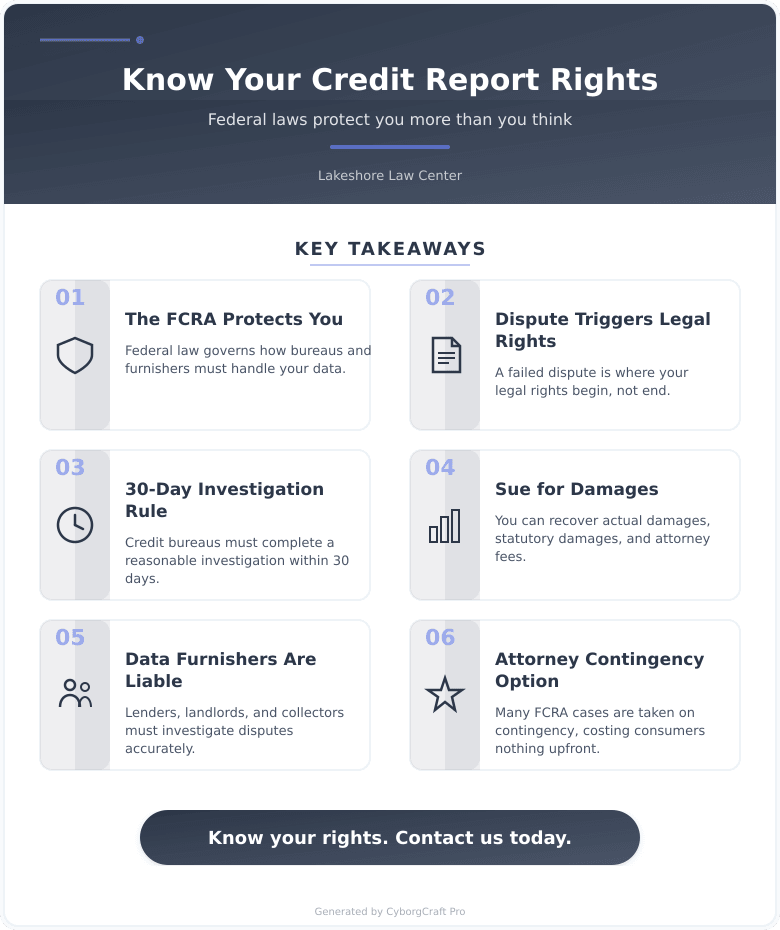
The Federal Laws That Give California Consumers the Right to Sue Over Inaccurate Credit Reporting – And Most People Have No Idea They Exist

Most California consumers who find errors on their credit reports don’t realize they have federal legal rights that go far beyond filing a dispute online. The Fair Credit Reporting Act gives consumers the right to sue credit bureaus and data furnishers when inaccurate information persists after a proper dispute, and to recover damages plus attorney’s fees. California’s own Consumer Credit Reporting Agencies Act adds another layer of protection. Completing a written dispute by certified mail is the critical first step that builds a legal record and triggers the bureau’s and furnisher’s reinvestigation obligations. If that process fails and the error has caused real harm – a loan denial, a housing rejection, a higher interest rate – a federal claim may be the most effective path forward. Documentation, timelines, and acting before the two-year statute of limitations runs out are all essential factors every California consumer should understand.

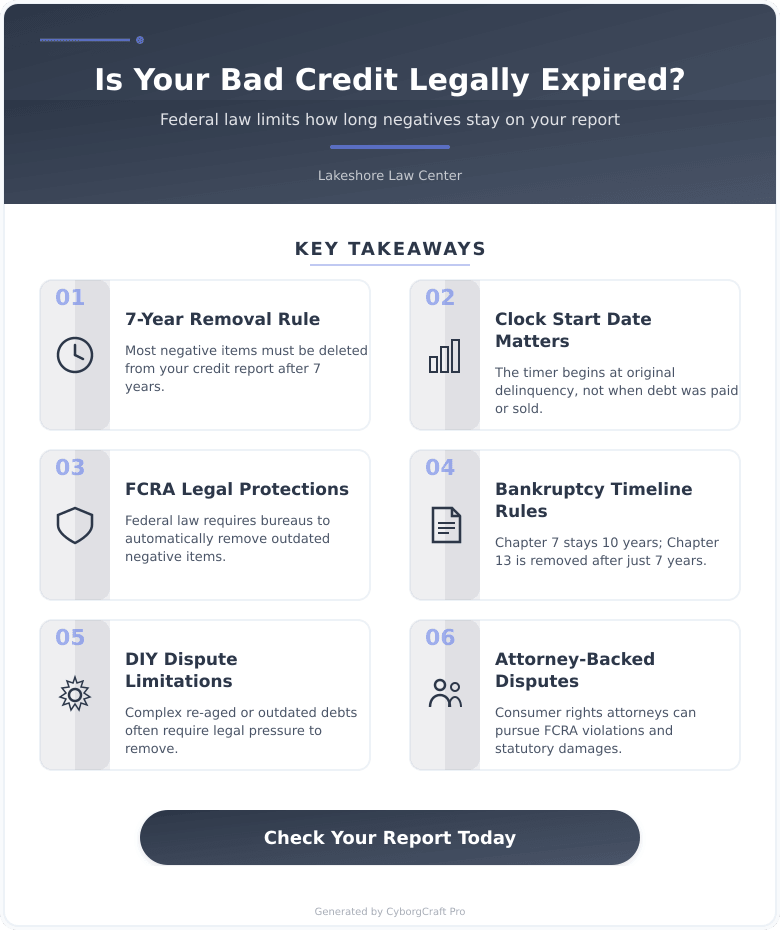
Negative Items That Should Have Fallen Off Your Credit Report Already – How to Tell If the Clock Has Run Out on Your Debt

Negative items on your credit report have a legal expiration date, but many consumers in California are still carrying the damage from debts that should have been removed years ago. The 7-year removal clock for most negative items starts at the original delinquency date, not when a debt was sold to a collector or when you last paid on it. Re-aging, the illegal practice of resetting that date to keep old accounts visible, is more common than most people realize. California law adds extra consumer protections on top of federal FCRA rights, and FCRA violations can entitle you to statutory damages. Knowing how to audit your report, identify outdated items, and escalate when a bureau refuses to remove them is essential for anyone working to rebuild their financial standing in 2026.

Medical Debt on Your Credit Report in California – What Changed Recently and Whether You Still Have Items That Can Be Challenged

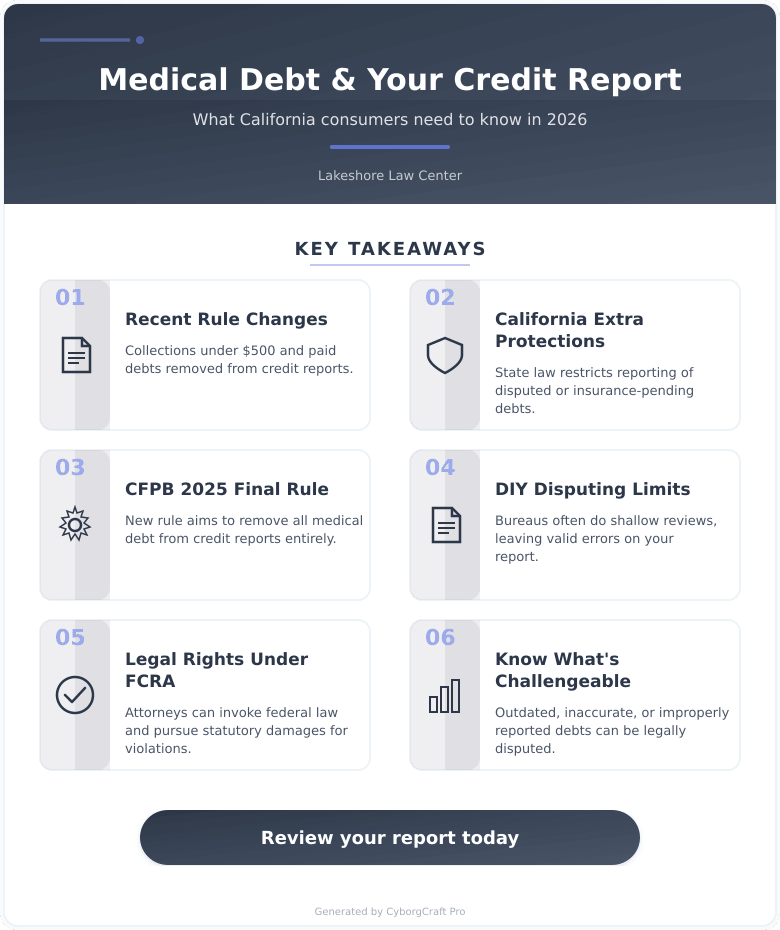
Medical debt on credit reports has been a major source of frustration for California consumers, but recent regulatory changes have removed a large category of these items entirely. Collections under $500, paid medical debts, and debts reported within the first year are no longer supposed to appear on credit files under current bureau policies. Even so, many consumers still have outdated or improperly reported items sitting on their reports. California’s Rosenthal Fair Debt Collection Practices Act adds protections beyond federal law, covering original creditors in ways that neighboring states like Oregon, Nevada, and Arizona do not. If a paid medical collection is still showing, or if a debt has passed its seven-year reporting window, those are challengeable errors. The FCRA gives consumers real legal tools – including the right to sue – when bureaus or collectors fail to correct verified mistakes.

Why California Residents Have Stronger Credit Reporting Protections Than Most Americans – And How to Actually Use Them

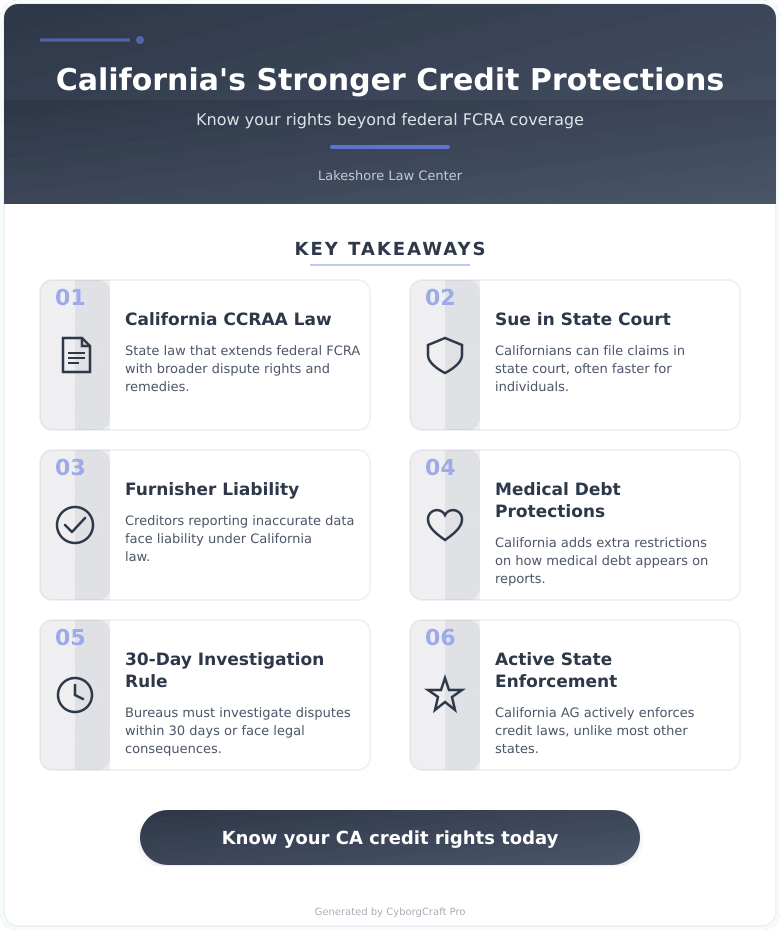
California residents hold credit reporting rights that most Americans simply do not have access to. The California Consumer Credit Reporting Agencies Act extends federal protections by giving consumers the ability to sue data furnishers, pursue claims in state court, and hold credit bureaus accountable for inadequate investigations. This piece breaks down how California law compares to neighboring states like Nevada, Arizona, and Oregon, outlines a practical step-by-step dispute process for 2026, and identifies the most common mistakes that undermine consumer disputes. Medical debt rules tightened significantly in 2025, and knowing how those changes interact with your credit file matters now. Whether dealing with a collection account, an outdated entry, or a creditor who ignored your dispute, California law provides more legal paths than most people realize.

The Real Reason Your Credit Score Isn’t Moving Even After You Paid Off the Debt – And What to Do About It

Paying off a debt and having your credit report accurately reflect that payoff are two completely different things – and the gap between them is why so many consumers find their scores stuck after doing everything right. Creditors don’t always update account statuses promptly, paid collections can linger as open negatives, and duplicate entries from multiple debt buyers can pile up unnoticed. California consumers have stronger dispute rights than most Americans under both the federal Fair Credit Reporting Act and the state’s own credit reporting laws, giving them real tools to push back. Simple errors often respond to DIY bureau disputes, but repeated or ignored errors may warrant legal action – which is often cost-free to the consumer under FCRA fee-shifting provisions. Knowing which path fits your situation can save months of frustration and unlock the score improvement you’ve already earned.

Charged-Off Accounts, Re-Aged Debt, and Duplicate Collections – The Three Credit Report Violations That Are More Common Than You Think

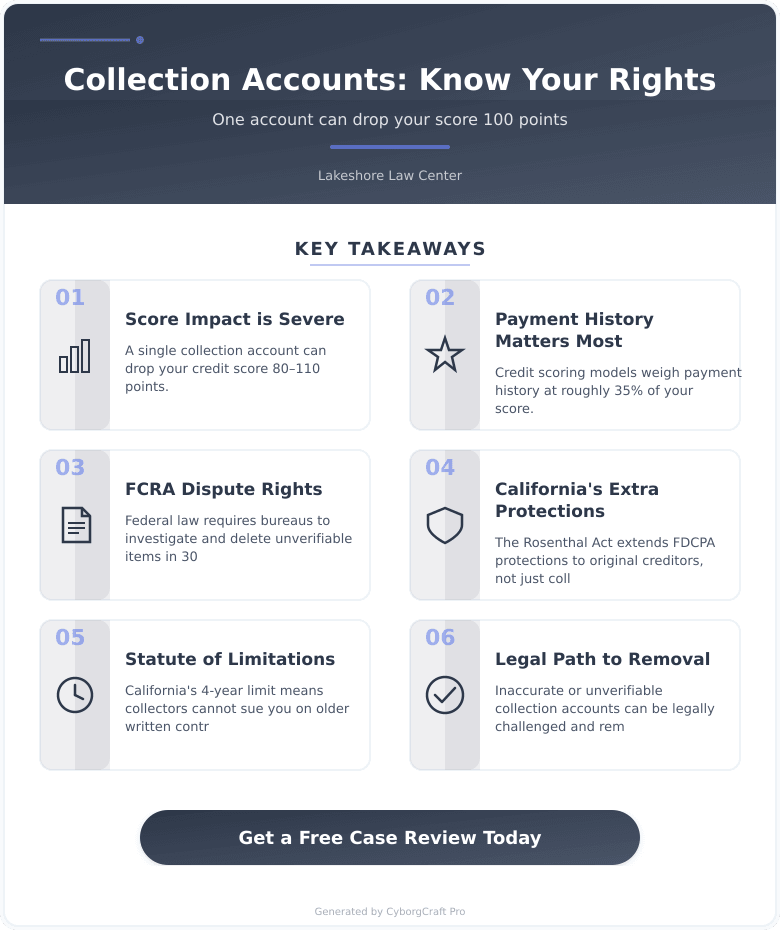
Charged-off accounts, re-aged debt, and duplicate collection entries are three of the most frequently occurring credit report violations – and most California consumers never recognize them. A charged-off account that shows a growing balance after charge-off, a collection with an altered delinquency date, or two entries for the same debt can each cause serious score damage and may violate both federal and California law. The Fair Credit Reporting Act and California’s Consumer Credit Reporting Agencies Act give consumers the right to dispute these errors and, when violations are willful, to pursue statutory damages. Knowing the difference between a legitimate negative item and an illegal reporting practice is what separates consumers who fix their reports from those who wait years for damage to expire on its own.

What a 100-Point Credit Score Increase Is Actually Worth in California – The Real Dollar Value of Fixing Your Credit

Raising your credit score by 100 points is not just a financial goal – in California, it is a measurable dollar figure that shows up in your mortgage payment, your car loan rate, your insurance premium, and even your ability to rent an apartment. With California’s median home prices running well above the national average in 2026, the gap between a fair and a good credit score can translate to more than $150,000 in interest savings over a 30-year mortgage alone. Beyond home loans, auto rates and credit card APRs shift significantly with a 100-point improvement. California residents also benefit from stronger credit dispute protections than most other states, giving them real legal tools to challenge inaccurate negative items. Understanding what your credit report actually says – and whether the negative items on it are accurate and within their legal reporting window – is the first step toward capturing that financial value.

Back to top